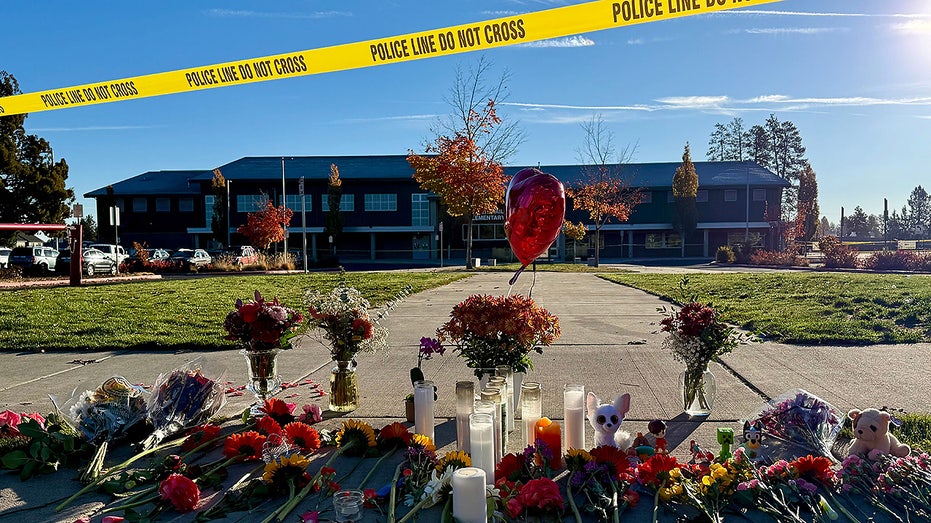
Three children and a teacher were killed on Oct. 15 at Silver Rail Elementary School in Bend, Oregon, just 20 minutes from our home in central Oregon. Four precious lives were stolen, leaving families facing a grief no parent, spouse, or loved one should ever have to endure. Children who should be coming home to their families will never walk through those doors again. A teacher who devoted a life to educating and caring for children is gone.
Among the critically injured is 7-year-old Saylor, a child who had previously been honored in Bend as a “Sparrow” through a program that supports children facing serious medical challenges. Already familiar with adversity, she is now fighting for her life after being shot in the face. Our hearts break for Saylor and for all the other victims of this devastating violence.
Our community and our nation are in mourning.
ARMED BYSTANDER FATALLY SHOOTS SUSPECTED TEEN GUNMAN AFTER 3 CHILDREN, 1 ADULT KILLED AT OREGON SCHOOL: FEDS
As an anti-bullying specialist and expert witness, I’ve witnessed more than 20,000 students around the world publicly apologize for bullying and related behavior. Some of these apologies have helped prevent students from harming themselves or others.
We don’t know the motives of the 16-year-old shooter. We don’t know whether he was bullied at Silver Rail or any other school. But this tragedy raises questions about a destructive pattern that requires entire communities—not just teachers and schools—to confront bullying. After all, bullying is a cultural problem, not merely a “school problem.”
The Secret Service’s report, “Protecting America’s Schools,” examined 41 targeted school attacks. Among the 35 attackers whose backgrounds were analyzed—all male—80% had experienced bullying. For 57%, that bullying was persistent.
There is no evidence at this point that bullying played any role in the Silver Rail attack. But research into past targeted school attacks shows why bullying remains one of the behaviors communities should take seriously.
Each time our nation reels from another school shooting, a dangerous misunderstanding is often treated as fact: The shooter must be severely mentally ill. Yet most people with severe mental illness are not violent. Equating psychiatric diagnoses with dangerousness stigmatizes people who need care and distracts from the specific behaviors that should concern us.
HERO DAD WHO TOOK DOWN OREGON SCHOOL SHOOTER IDENTIFIED ALONG WITH TEACHER, STUDENT BOTH KILLED IN ATTACK
Having worked with countless targets of bullying for more than 25 years, I’ve witnessed how persistent abuse can leave children emotionally inflamed. Some turn their pain inward, while others express it outwardly through anger, aggression and sometimes violence. Too many are expected to endure a level of persistent abuse that no adult would tolerate.
Telling a child to ignore cruelty is not intervention. Admonishing a child to “turn the other cheek” in the face of relentless abuse is one of the most tortured applications of Scripture. Requiring an apology without checking whether the abuse has stopped is not accountability. Moving the targeted child to another classroom or school—an all-too-common practice—while leaving the aggressor unchecked only deepens the injustice and resentment.
POLICE DISPTACH AUDIO RELEASED AFTER OREGON ELEMENTARY SCHOOL SHOOTING
Students need trustworthy adults and clear reporting options, including anonymous reporting. They also need protection against retaliation. When reporting makes life worse, children learn to remain silent precisely when adults most need information.
What most people don’t understand is that bystanders possess the greatest potential power in the theater of bullying. Bullies often seek an audience, and that audience can either reward their cruelty through laughter, encouragement, or silence—or help stop it through courageous action. When witnesses intervene safely, they can shift the balance of power in favor of the targeted child.
CLICK HERE FOR MORE FOX NEWS OPINION
To help break the connection between persistent bullying and the risk of school violence, we need a national commitment that begins at the dinner table. We must expand our family values to include a simple pledge: When our children witness bullying, they will take at least one of three actions:
1. Comfort the targeted child afterward.2. Report—not tattle—what they saw or heard.3. Intervene directly, when safe, using assertive but nonviolent words.
Have this conversation with your family today.
Because right now, while adults cry, mourn, and thank God their own children are safe, thousands of other children are carrying emotionally inflamed hearts. They, too, are precious to God. Compassionate bystander intervention can help ease their suffering, reminding them that the cruelty they endure is undeserved, that they are not defined by it, and that they are loved.
CLICK HERE TO DOWNLOAD THE FOX NEWS APP
We won’t stop every school shooting. But we can stop complacency. That begins when we teach our children that witnessing bullying carries a responsibility to act safely and compassionately.
Bullying does not have to be an ordinary part of growing up. And standing against it should become an ordinary part of raising our children.
The one lesson every parent should teach their child after the Bend school shooting
